Author: Staci Nichols – Chief Marketing Rebel
Read Time: TBD minutes | Publication Date: TBD
Watch It on YouTube
Key Terms Defined
- Term: definition
Subheading
“Quote.” -Person
Coming Soon
To create true integration, supply chain leadership must redefine collaboration as a vertical, not just horizontal, priority. The caste system that currently pervades SCM assumes a limited understanding of, integration where so-called “top tier” partners network and integrate with other top tier partners (i.e. Nestlé with Starbucks). That kind of alliance and transparency between a tier 1 and tier 3 or 4 partners is rare. At present, integration is a euphemism for top-down exploitation, where value is extracted but not shared.
Supply chain relationship management involves the initiation, implementation, maintenance, and, when necessary, the termination of connections between companies and their supply chain partners. Langley et al., (2025) even specifies that strong relationships, particularly among top-tier suppliers, boost supply chain efficiency by enabling trust, information sharing, and long-term planning. No logic is offered as to why this wouldn’t build cross-tier trust. Nevertheless, these benefits are most prevalent in high-integration contexts such as vendor-managed inventory (VMI), collaborative planning, forecasting and replenishment (CPFR), and shared risk models. In such frameworks, trust and reciprocity become operational imperatives rather than optional ideals, as firms that embed transparency and shared incentives into daily workflows tend to outperform those with rigid, transactional models.
In traditional GSC relationship management, so-called “low tier” or smaller, upstream partners experience what Thorne and Doyle (2022) describe as “relational opacity.” Despite these smaller partners being essential to production, they are excluded from planning, oversight, and full integration. In SCM, same-tier partner collaboration creates equally fruitful value propositions, while cross-tier interactions tend to be one-sided, where one organization gives and the other takes. Essentially, some supply chain partners have a privatized version of Most Favored Nation (MFN) status, while others do not.
This virtually ubiquitous double standard is particularly evident during times of crisis. For example, during the COVID-19 pandemic, Nestlé’s “MFN suppliers” received guidance, cash-flow flexibility, and technology support, while the “untouchable caste” of partners were expected to maintain output without additional support (Nestlé, n.d.). Such inconsistencies are commonplace across global industries, reinforcing a deeply-rooted hierarchy. Relationship management thus becomes a mechanism for maintaining privilege rather than fostering shared resilience (Berg et al., 2020). Again, the full extent of holistic integration benefits stop short at cross-tier value-adding collaborations. Through capacity-building, shared data systems, and contractual fairness, ultimately, all supply chain relationships would benefit from transactional to transformational.
From a stakeholder’s point of view, SCM helps companies compete on a global scale by improving operational efficiency, lowering costs, and offering greater diversity. According to Langley et al. (2025), the modern supply chain must be viewed not simply as a cost center but as a source of competitive advantage, especially when well-integrated with logistics, procurement, and information systems. However, as noted by Tran et al. (2026), SCM’s pursuit of “flexibility” often leads to unstable employment, wage theft, and labor exploitation in its upstream partners, outcomes that are ignored by standard SCM metrics.
Beyond a stakeholder’s perspective, SCM’s practically cancer-like efficiency has a deeply unsettling dark side. The US, for example, imports $169 billion worth of slave-made goods annually (Walk Free, 2023). The motivation for moving goods across oceans is often based on the benefits of exploiting the instability, natural resources, and vulnerable labor of LDCs. In choosing to do business in places like Southeast Asia, West Africa, and South America, MNCs are not shaking hands with Nigeria, China, or Peru per se, they are partnering with the dictators, mafias, pirates, cartels and, as Musa (2025) states, “bandits” that rule these regions. Under these conditions, the currency of business is extortion and bribery, leaving local populations captives under duress that must, for example, work in the bandit’s field or face aggressive, violent, or even deadly backlash (Musa, 2025).
In turn, the World Benchmarking Alliance found that 90% of the wealthiest global companies fail to respect human rights (Hale, 2024). Very few companies align GSC network design with ethical sourcing or labor sustainability metrics (Tran et al., 2023). Most procurement strategies focus on price and volume, regardless of how these human costs weaken supply chains (Human Rights Watch, 2016). Moreover, upstream nodes remain legally and operationally opaque, creating dangerous blind spots for worker welfare and ethical compliance (Thorne & Doyle, 2022). The result is, as the Global Slavery Index reports, 28 million people worldwide living in forced labor or “modern slavery” conditions (Walk Free, 2023).
In that vein, global supply chains operate on a foundation of cognitive dissonance, requiring participants to engage in practices that, under ordinary moral standards, would be outright condemned, such as supporting forced labor or environmental degradation. For example, supply chain managers praise holistic approaches…as long as “holistic” doesn’t include worker well-being, sustainability, or safety. So detail-focused that they will build digital twins and complicated heuristic models, the genuinely gifted puzzle-masters that manage GSCs are capable of juggling 106-step international logistics processes for moving live animals or frozen goods half way around the globe but unconcerned about what happens upstream in their own domains. Similarly, integrated, transparent, and omnichannel systems are praised…as long as none of those channels are publicly transparent or integrated with smaller, upstream partners.
If the Langley et al. (2025) SCM textbook serves as a representation of this industry in general, the circular logic, tunnel vision, and science-denial is alarming. Across 583 pages, there is not a single reference to the resilience-threatening exploitation that underpins much of the global supply chain system (Langley et al., 2025). For a field defined by industrialized efficiency and granular control, this is a staggering blind spot. The sustainability discussion in Chapter 15 exemplifies corporate doublespeak: it applauds “back to basics” SCM strategies, despite these same strategies being foundational to the very environmental crises the chapter claims to address. Langley et al. (2025) present benign-sounding yet structurally impotent frameworks, such as ESG and the 5 Rs, while celebrating companies like FedEx, a company with $100 billion annual revenue, for committing just 2% of one year’s profits toward carbon neutrality over a 15-year horizon. In the same breath, the textbook laments that the very environmental deregulation these MNCs lobby for offers little structure, protocol, and guidance on improving sustainability. Perhaps most baffling is the call to eliminate complexity from GSCs without acknowledging the obvious solution: to simply stop sourcing from unstable and vulnerable LDCs if greater ease is truly desired.
Highlighting the blindspots in traditional global SCM, MNCs like Nestlé demonstrate a short-sited disregard for overwhelming evidence linking employee well-being to supply chain resilience (Shea, 2022). Well-being at work is linked to: higher performance and productivity, greater optimism, friendliness, motivation, energy, positive behavioral outcomes that shape corporate outputs, and a full mediating relationship where happiness drives performance. Investing in worker well-being yields tangible performance and loyalty rewards (Met at al., 2023). Furthermore, in a sample of 492 frontline banking employees, Salas-Vallina et al. (2020) find that higher happiness at work is associated with better cross-selling performance, increasing the number of products sold per customer and sales per account. Additionally, a systematic review of 30 studies (2001–2018) on happy-productive work-units finds a generally positive, significant association between collective well-being (satisfaction, affect, engagement) and performance across subjective and objective indicators (García-Buades et al., 2020). By prioritizing cost minimization and total operational control, MNCs embrace a high-turnover model that undermines institutional knowledge and creates operational fragility, particularly during market disruptions (Nelms et al., 2025). Valued workers are valid investments in organizational resilience, which doesn’t always compute in SCM.
Before analyzing Nestlé from 2018-present, it’s important to first understand how COVID-19 generally impacted the global marketplace. The International Labour Organization (ILO) reported that 2020 saw an 8.8% loss of global working hours, equivalent to 255 million full-time jobs, and an 8.3% fall in global labor income ($3.7 trillion USD). Additionally, as vulnerable workers were most likely to be exploited to ensure the global marketplace cranked on, the infamous empty store shelves of COVID-19 exposed longstanding human rights abuses within GSCs, which came at a direct cost to U.S. consumers.
For example, U.S. Customs and Border Protection’s 2022 detention of suspected slave-produced sugar from Dominican sugar supplier, Central Romana, caused U.S. sugar prices to increase by 14% year-over-year, highlighting how forced labor disrupts GSC flows. Similarly, unsafe working conditions in the U.S. meatpacking industry in 2020 drove cattle and hog plant capacity down by 45% and pushed meat production to 40% of 2019 levels, revealing how abusive models translate directly into supply interruptions (Flacks & Zou, 2022). COVID-19 human rights vulnerabilities resulted in major supply chain failures like factory shutdowns, transportation bottlenecks, and demand swings that disrupted multiple production and logistics stages. For the most part, these failures disproportionately impacted the already vulnerable supply chain links, manual laborers and essential industrial and retail workers (Xu et al., 2020).
Despite evolving over recent years in response to global disruptions, reputation damage, and consumer demands, Nestlé scored zero out of 100 on the Ethical Consumer Research Association’s corporate ethics scale, rating it as the least ethical MNC (Hunt, 2024). During COVID-19, Nestlé quickly adapted its inventory and distribution strategies, showcasing how global coordination and decentralization can operate in tandem when aided by modern technology (“Milliken building new plant,” 2019). The company actually achieved 3.5% organic growth amidst the pandemic by doubling down on food and beverages consumed at home and by divesting from vulnerable partners, like Chinese Yinlu peanut milk (Koltrowitz, 2020). On the other hand, several studies noted that Nestlé’s diverse portfolio of over 2,000 brands, particularly in pet food, baby formula, and at-home coffee, is what stabilized its revenues during COVID-19 (Lakhani et al., 2021).
Nestlé, named a top global plastic polluter in 2020 (Plastic Pollution Coalition, 2020), relies heavily on reputation management campaigns, such as issuing corporate social responsibility (CSR) reports and carefully curated narratives despite no actual shifts in supplier governance or worker protections (Rodrigue & Hassan, 2021). For example, in a Nestlé COVID-19 corporate statement, the company offered this ambiguous reassurance: “We have added employee [COVID] testing events when and where it makes sense” (Nestlé, n.d.).
The pandemic prompted an intensification of Nestlé’s corporate social responsibility (CSR) positioning. The company launched modest but publicized relief initiatives like product donations, food bank support, and offering top-tier workers the opportunity to work remotely. Nestlé framed these minimal efforts as both resilient and socially responsive (Nestlé, n.d.). Nestlé has adopted some transparency-focused reporting on ethical concerns like child labor in its cocoa procurement, but scholars argue these disclosures reflect brand positioning and damage control rather than genuinely effective actions (Chen et al., 2025).
Social media-based research also shows that consumer responses to Nestlé’s irresponsibility are emotional and capable of influencing corrective actions (Dumay et al., 2020). For example, the company’s marketing of high-sugar baby foods in African countries, which differs from the same product formulations in Europe, exposing a disturbing double standard (Dumbili et al., 2025). Furthermore, Nestlé’s crisis communication failures, such as during the Maggi noodles controversy in India, illustrate the risks of unethical conduct (Dhanesh & Sriramesh, 2018). Tests revealed excessive levels of lead and monosodium glutamate in Nestlé’s Maggi noodle products, prompting a nationwide recall and a temporary ban. This crisis led to significant financial losses, consumer distrust, and regulatory scrutiny that challenged Nestlé’s credibility in one of its largest markets.
Despite the reality of Nestlé’s predatory sourcing, questionable product formulations, and wasteful packaging, their sales have remained steady, in part, due to the fact that it’s difficult to avoid them at the grocery store as they, for example, own 24% of the bottled water on the market (Ramya, 2025). In that vein, a math modeling system in which the next state depends only on the current state called the Markov Chain model was conducted of Nestlé Nigeria’s stock performance, and it also suggested general financial stability (Rinyen et al, 2025). Nestlé’s financial resilience is, however, largely attributed to its brand positioning and responsive global strategy, though sustained growth will depend on authentic ESG alignment (Dibia et al., 2025).
Furthermore, the recent Tomasella v. Nestlé USA, Inc. court case drew attention to Nestlé’s use of child labor in its West African cocoa production (Winton, 2022). The company also endured a scandal involving misleading marketing practices in its bottled water subsidiary, which violated EU regulations and led to a reputational crisis (Mehta, 2025). Additionally, misconduct in infant product promotion continues to impact the company’s image, prompting global boycotts and international policy responses (Johnson, 2020). Although Nestlé has adopted some reforms, studies show that consumer trust remains fragile due to skepticism toward a lack of transparency and governance (Sin et al., 2022). In conclusion, a literature review of Nestlé from 2018-2025 primarily reveals that its pandemic-era supply chain performance is more attributable to its vast brand portfolio and adaptability than to any genuine innovation. While the company maintained stability, its reputation remains fragile amid ongoing allegations of exploitation, calculated media spinning, and unethical conduct.
Strategic Alliances and Collaboration
Despite research supporting a broader definition of “strategic partnerships,” upstream “transparency” for MNCs rarely includes labor practices, safety outcomes, or supplier support efforts, which are key indicators of whether value creation is equitably distributed (Tran et al., 2026). Certain strategic priorities must take precedence over cost efficiency, and, for stakeholders, the corporate resilience to survive the next Black Swan event should be one of them (Ivanova, 2025). Contemporary GSCs often resemble hierarchical, feudal-like systems, and history reminds us that the original feudal model ended because of a Black Swan event, the Plague.
In a durable GSC, corporate viability increasingly depends on agility, resilience, and sustainability, a far more diverse base than just short-term returns and cost-cutting. Investing in smaller, upstream suppliers helps MNCs recover quickly from inevitable disruptions (Ivanov, 2022). Furthermore, evidence shows that the popular SCM strategy of just-in-time (JIT) inventory management, which aligns raw material orders from suppliers directly with production schedules, leaving almost no emergency inventory buffer, should be selectively adapted in turbulent contexts by segmenting flows and adding safeguards where risk concentrates, shifting resources toward fragile upstream nodes (Choi et al., 2023). Likewise, disaster preparedness research demonstrates that robust performance during Black Swan events requires stockpiled inventory, backup materials, and standby capability, functions that primarily stem from upstream suppliers (Li et al., 2023). In other words, a GSC sitting on top of a foundation of opaque, one-sided relationships erodes both financial and operational resilience.
In considering a historical example of another one-sided supply chain relationship, slavery in the U.S. was present in every British colony, including New York City, before the American Revolution. While the North evolved beyond the practice, developing greater economic resilience and investing in infrastructure like the Erie Canal, the South developed what economist Gavin Wright terms “path dependence” marked by resistance to emerging data and sentiments (Wright, 2022). With approximately one-third of its population (4 million slaves) not paying taxes and significantly fewer jobs for its residents, the South had little to invest in infrastructure and public education, resulting in a weaker economy that, to this day, lags behind the North. MNCs exhibiting comparable “path dependence” on exploitative sourcing may ultimately face the same fate as the post-Civil War South.
The feudal approach to SCM relationships contrasts sharply with demonstrably successful models proven by companies such as Dr. Bronner’s, which caps CEO salary at five times the lowest-paid worker’s pay (Shibu, 2024). Likewise, Boeing actively invests in worker resilience via internal training and well-being initiatives to cultivate a loyal, skilled workforce (Bell, 2021). Treating workers as long-term investments rather than replaceable labor units is not only a sustainable business practice but a crucial investment in long-term stability and survivability (Tirschwell, et al., 2024). In fact, top tier companies who actively and fairly engage marginalized or minority-owned suppliers report increased loyalty and long-term partnership success (Blount et al., 2021). Ultimately, a narrow interpretation of GSC alliances perpetuates operational vulnerability, like the Civil War-era South, by ignoring the proven link between a valued workforce and a robust supply chain (Morales, 2025).
As further proof, Ford and Gillan’s (2025) analysis supports MNCs integrating with upstream suppliers, especially cross-tier collaborations. In the “Catcher to Counter” campaign, organizers recruited approximately 20,000 fish harvesters and processors across four companies in Papua New Guinea and secured a 65% wage increase, resulting in substantially reduced turnover. This case study also traces how cross-tier collaboration lowers operational risk and enhances supply chain continuity (Ford & Gillan, 2025).
In another case study by Gou et al. (2020), an often-overlooked, smaller supply chain partner, the local media company, was recognized as a full participant, receiving subsidized support from the manufacturer for “last mile” promotional efforts (in-store activations, local coupons). Neutral third-party platforms, such as the Local Search Association, certified spend and codified program rules, which reduced opportunism and administrative friction that disproportionately hurts smaller supply chain partners. This case study demonstrates that when every node is treated as a valuable collaborator with shared rules and transparent, integrated information that network-wide demand and value creation improve.
Proposed Global Stakeholder Program
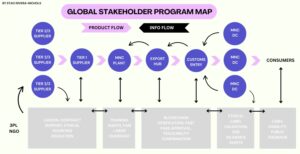
Considering that today’s wealthiest MNCs have a demonstrated “path dependence” on exploiting LDCs, a Global Stakeholder program is proposed. The suggested initiative offers a carrot rather than a stick, speaking in the language of MNC priorities: money, efficiency, and brand protection. Facilitating the dismantling of the global marketplace’s current supplier caste system, the voluntary Global Stakeholder program would facilitate MNC partnerships with select non-governmental organizations (NGOs) like the human rights watchdogs International Labour Organization, UNICEF, and Amnesty International for sourcing from LDCs. According to Villena & Gioia (2020), the current standard in GSCs is to delegate procurement to midstream partners, so this program requires no major process shift.
The NGO fiduciaries would act as facilitators, mentors, and liaisons, helping smaller suppliers negotiate better terms, conditions, and standards, build resiliency, and advocate for bargaining power. The MNCs would treat the NGO facilitators like any other third-party logistics (3PL) provider, paying fairly for their services. Anchoring policy in existing ILO and Organisation for Economic Co-operation and Development (OECD) Due Diligence Guidance frameworks, clear benchmarks, risk-based controls, and state-backed complaint channels would translate into regular assessments, coaching, and transparent corrective action plans (CAPs). To shut off the forced labor pipeline, the NGO 3PLs would also educate MNCs on how worker wellbeing and safety is a resilient supply chain metric and educate and empower smaller suppliers about the type of support, pay, and conditions they should expect and demand from a multi-billion dollar partner.
Consumers increasingly seek proof of ethical sourcing and human dignity embedded in the production process, not just greenwashed labels or gestures (Walk Free, 2023). On that note, the Global Stakeholder program would not only reward MNCs with more resilient GSCs but participants would be allowed to use a certified “Global Stakeholder” label modeled after programs like USDA Certified Organic product logo or publicly-displayed restaurant grading systems (A, B, C).
The final incentive of the Global Stakeholder program is the opportunity for participating MNC shipments to earn a blockchain-secured U.S. border “Ethically-Sourced Fast Pass” expediting clearance at American ports, reducing both risk and cost. These ethically-sourced fast passes would require that human rights due diligence (HRDD) benchmarks be met and require blockchain-secured chain-of-custody documentation. The MNC’s Global Stakeholder NGO partner would need to sign off on each shipment’s fast pass.
A longitudinal study of Nestlé’s child labor communications shows why delegating LDC supplier oversight to NGOs is essential for real progress. Between 2011–2021, Nestlé’s child labor narrative evolved from distancing to compliance to recognition to remediation, but these shifts were accompanied by increasingly opaque “risk” metrics that positioned the company as an expert without substantiating real change (Chelli et al., 2025). Such self-appointed expert framing allows MNCs to control the narrative without any checks and balances.
Benchmarks, such as the UN’s SDG 8.7 initiative which aimed to eliminate global slavery by 2025, continue to fail when they are “enforced” by corporate self-regulation without oversight (Chelli et al., 2025). In the face of child labor claims, Nestlé began to rely on third-party specialists (Verité, Fair Labor Association, Intertek) to investigate and remediate smaller suppliers, evidence that independent intermediaries are better positioned and motivated to detect abuse abroad (Chelli et al., 2025). Perkiss et al.’s (2021) findings also support a solution like the Global Stakeholder program, based on how Nestlé curated misleading ESR campaigns regarding their unsustainable cocoa farming in Côte d’Ivoire. Furthermore, New (2015) also specifically called for independent, third-party auditing of GSCs, reinforcing the case for an independent, NGO-facilitated 3PL model. Alton (2025) urges independent, third-party auditors as well, plus truth in labeling, as imperative to eradicate GSC forced labor.
To summarize, supply chain managers need only apply their existing stated values of integration, holistic solutions, and strategic collaboration to upstream suppliers in order to boost GSC resilience. Nestlé and other MNCs risk the fate of feudal states and the post-Civil War South with a continued path dependence on opaque, one-sided relationships, forced labor, and exploitation. The panic of empty grocery store shelves during COVID-19 served as a stark wake-up call that MNCs need to heed in order to absorb the next Black Swan event.
Conclusion and Observation
“When people eat chocolate, they are eating my flesh.”
-Drissa, former Nestlé child laborer (Winton, 2022)
In exploring the function of GSCs in today’s economy, the foundational elements of SCM were analyzed, drawing from academic frameworks and logistics best practices. However, these functions are traditionally measured with a tunnel vision approach that expects perpetual growth rates with minimal concern for essential upstream partners that have the power to topple GSCs.
The proposed Global Stakeholder program offers a pathway toward protecting people and the value in GSCs. By truly, fairly, and equitably integrating smaller suppliers into the network, MNCs can shift to a genuinely resilient vertical collaboration model. MNCs like Nestlé that hold tight to feudal-style GSCs must decide between path dependence or evolving responsively, which COVID-19 showed they are capable of doing.
The observation from this paper’s analysis is that the exploitative nature of many GSCs is not only ethically indefensible but also structurally fragile, contradicting the core principles of SCM. By sidelining the well-being of smaller, upstream partners, MNCs embed systemic vulnerabilities that weaken their very existence. This observation raises a critical question: Is the rhetoric of SCM designed to optimize value or to obscure the moral cost of so-called global efficiency? Upon deeper analysis, the concepts of SCM appear to exist as a distraction from what the system is really defined by: greed and power, not functionality.
Resources
Alton, D. (2025). Exposing modern slavery in global supply chains. GIS Reports (Geopolitical Intelligence Services AG). https://www.gisreportsonline.com/r/modern-slavery-global-supply-chains/
Bell, M. (2021). 14 drivers of supply chain worker turnover. WorkStep. https://www.workstep.com/resources/whats-driving-supply-chain-workforce-turnover/
Berg, L., Farbenblum, B., & Kintominas, A. (2020). Addressing exploitation in supply chains: Is technology a game changer for worker voice? Anti-Trafficking Review, 14, 47–66. https://doi.org/10.14197/atr.201220144
Blount, I., & Li, M. (2021). How buyers’ attitudes toward supplier diversity affect their expenditures with ethnic minority businesses. Journal of Supply Chain Management, 57(3), 3-24. https://doi.org/10.1111/jscm.12237
Chelli, M., Himick, D., Al Mahameed, M., & Belal, A. (2025). Child labour risk organizing communication: A longitudinal analysis of corporate narratives. Meditari Accountancy Research, 33(3). https://doi.org/10.1108/MEDAR-10-2024-2679
Chen, A., Gerick, L., & Tang, Q. (2025). Strategic timing of corporate social responsibility investments under reputational risk. Risk Sciences, 1, 100008. https://doi.org/10.1016/j.risk.2024.000008
Dhanesh, G. S., & Sriramesh, K. (2018). Culture and crisis communication: Nestlé India’s Maggi noodles case. Journal of International Management, 24(3), 204–214. https://doi.org/10.1016/j.intman.2017.12.004
Dibia, K., Opuala-Charles, S., & Idanga, L. (2025). Financial analysis of Nestlé Nigeria Plc: Current and future performance evaluation. ISAR Journal of Economics and Business Management, 3(5), 23–45. https://www.researchgate.net/publication/392812868
Dumay, J., Bernardi, C., Perkiss, S., & Haslam, J. (2020). Examining stakeholder reactions to corporate social irresponsibility: Evidence from social media. Critical Perspectives on Accounting, 80, 102180. https://doi.org/10.1016/j.emj.2024.11.001
Dumbili, E. W., Bwalya, J., & Osborne, A. (2025). Commercial determinants of infant and child health: A focus on Nestlé’s baby food products marketed in Africa. Ethics, Medicine and Public Health, 33, 101186. https://doi.org/10.1016/j.jemep.2025.101186
Flacks, M., & Zou, C. (2022, December 16). To build resilient global supply chains, incorporate respect for human rights. Center for Strategic and International Studies. https://www.csis.org/analysis/build-resilient-global-supply-chains-incorporate-respect-human-rights
Ford, M., & Gillan, M. (2025). Coalition-building as a power resource: Transnational collaborations between global unions and non-union actors. Social Movement Studies. https://doi.org/10.1080/14742837.2025.2530414
García-Buades, M. E., Peiró, J. M., Montañez-Juan, M. I., Kozusznik, M. W., & Ortiz-Bonnín, S. (2020). Happy-productive teams and work units: A systematic review of the “happy-productive worker thesis”. International Journal of Environmental Research and Public Health, 17(1), 69. https://doi.org/10.3390/ijerph17010069
Gou, Q., Shao, J., Wang, X., & Yu, L. (2020). Co-op supply chains with a local media company: Models and analysis. Transportation Research Part E: Logistics and Transportation Review, 136, 101893. https://doi.org/10.1016/j.tre.2020.101893
Hale, E. (2024, July 2). Nine in 10 top global companies failing to uphold human rights, report says. Al Jazeera. https://www.aljazeera.com/economy/2024/7/2/nine-in-10-top-global-companies-failing-to-uphold-human-rights-report-says
Human Rights Watch. (2016, May 30). Human rights in supply chains: A call for a binding global standard on due diligence. https://www.hrw.org/report/2016/05/30/human-rights-supply-chains/call-binding-global-standard-due-diligence
Hunt, T. (2024, August 9). Five unethical companies. Ethical Consumer. https://www.ethicalconsumer.org/retailers/five-unethical-companies
Ivanova, M. (2025). Lean vs resilient supply chain: In search of the tipping point and synergies. International Federation of Automatic Control—PapersOnLine, 59(10), 77–81. https://doi.org/10.1016/j.ifacol.2025.09.015
Johnson, D. A. (2020). Advocacy, strategy and tactics used to confront corporate power: The Nestlé boycott and the international code of marketing of breast-milk substitutes. Journal of Human Lactation, 36(4), 681–685. https://doi.org/10.1177/0890334420955158
Jones, K., Mudaliar, S., & Piper, N. (2021). Locked down and in limbo: The global impact of COVID-19 on migrant worker rights and recruitment. International Labour Organization. https://www.ilo.org/tr/media/379501/download
Kabir, M. A., Khan, S. A., Gunasekaran, A., & Mubarik, M. S. (2025). Multi-criteria decision making to explore the relationship between supply chain mapping and performance. Decision Analytics Journal, 15, 100577. https://doi.org/10.1016/j.dajour.2025.100577
Koltrowitz, S. (2020, October 21). Nestlé shrugs off COVID-19 impact thanks to pet food and health nutrition. Reuters. https://www.reuters.com/article/markets/Nestlé-shrugs-off-covid-19-impact-thanks-to-pet-food-and-health-nutrition-2020-10-21/
Lakhani, N., Uteuova, A., & Chang, A. (2021, July 14). Revealed: The true extent of America’s food monopolies, and who pays the price. The Guardian. https://www.theguardian.com/environment/ng-interactive/2021/jul/14/food-monopoly-meals-profits-data-investigation
Langley, C. J., Jr., Novack, R. A., Gibson, B. J., & Coyle, J. J. (2025). Supply chain management: A logistics perspective (13th ed.). Cengage Learning.
Lei, L. (2025). Analysis of the cooperation model between Starbucks and Nestlé. Journal of Advances in Accounting, Economics, and Management, 3(1), 1–6. https://economics.pubmedia.id/index.php/aaem
Li, L. (2025). Analysis of the cooperation model between Starbucks and Nestlé. Journal of Advances in Accounting, Economics, and Management, 3(1), 1–6. https://doi.org/10.47134/aaem.v3i1.830
Lo, H.-W., Pai, C.-J., & Deveci, M. (2025). A multi-objective model for integrated supplier order allocation and supply chain network transportation planning decision-making. Information Sciences, 689, 121487. https://doi.org/10.1016/j.ins.2024.121487
Mehta, S. (2025). Contaminated confidence: Nestlé’s ‘natural’ water scandal. Sage Publications. https://doi.org/10.4135/9798348836061
Met, İ., Erkoç, A., İpek, B., & Kızıldere, N. A. (2023). Being a game changer with happy workers: The Ziraat Bank example. Heliyon, 9(7), e18027. https://doi.org/10.1016/j.heliyon.2023.e18027
Milliken building new plant for PP clarifier; collaborates with PureCycle and Nestlé, Additives for Polymers, May 2019, Mark Allen Group, https://doi.org/10.1016/S0306-3747(19)30117-4
Morales, Nicolas. (2025). Supply chain resilience and the effects of economic shocks. Federal Reserve Bank of Richmond. https://www.richmondfed.org/publications/research/economic_brief/2025/eb_25-02
Musa, S. Y. (2025). Banditry and modern slavery: (In)security dynamics in Nigeria. Journal of Economic Criminology, 10, 100194. https://doi.org/10.1016/j.jeconc.2025.100194
Nelms, D., Mahan, W., Freeze, G. (2025). 2025 retention report: Employee retention truths in today’s workplace. Work Institute. https://info.workinstitute.com/hubfs/2025%20Retention%20Report/2025%20Retention%20Report%20-%20Employee%20Retention%20Truths%20in%20Todays%20Workplace.pdf
Nestlé USA. (n.d.). How has Nestlé responded to the COVID-19 pandemic? https://www.Nestléusa.com/ask-Nestlé/Nestlé-covid-19-response
New, S. J. (2015). Modern slavery and the supply chain: The limits of corporate social responsibility? Supply Chain Management: An International Journal, 20(6), 697–707. https://doi.org/10.1108/SCM-06-2015-0201
Perkiss, S., Bernardi, C., Dumay, J., & Haslam, J. (2021). A sticky chocolate problem: Impression management and counter accounts in the shaping of corporate image. Critical Perspectives on Accounting, 81, 102229. https://doi.org/10.1016/j.cpa.2020.102229
Plastic Pollution Coalition. (2020, December 2). The Coca-Cola Company, PepsiCo, and Nestlé named top plastic polluters for third year. https://www.plasticpollutioncoalition.org/blog/2020/12/2/the-coca-cola-company-pepsico-and-nestl-named-top-plastic-polluters-for-third-year
Ramya, K. (2025, March). A study on consumer preference towards Nestlé products. In Proceedings of the International Conference on Emerging Trends in Science and Technology (ICETST-2025). https://www.researchgate.net/publication/392561605
Rinyen, N. R., Abdulkadir, K., Zigwai, F. F., Haladu, M., & Ahmed, R. N. (2025). Application of Markov chain to model the monthly stock prices of Nestlé Foods Nigeria PLC. Journal of Science Innovation and Technology Research, 9(9), Article 043. https://doi.org/10.70382/ajsitr.v9i9.043
Rodrigue, M., & Hassan, A. (2021). A sticky chocolate problem: Impression management and counter accounts in the shaping of corporate image. Critical Perspectives on Accounting, 75, 102–111. https://doi.org/10.1016/j.cpa.2020.102229
Salas-Vallina, A., Pozo-Hidalgo, M., & Gil-Monte, P. R. (2020). Are happy workers more productive? The mediating role of service-skill use. Frontiers in Psychology, 11, Article 456. https://doi.org/10.3389/fpsyg.2020.00456
Shea, Sophie (2022). Why is inflation high? Broken supply chain, corporate greed. Colorado Fiscal Institute. https://coloradofiscal.org/inflation-supply-chain-corporate-greed/
Shibu, S. (2024, July 1). This company caps CEO pay depending on how much its lowest-paid employee makes. Entrepreneur. https://www.entrepreneur.com/business-news/dr-bronners-ceo-salary-cap-based-on-lowest-employee-wage/476435
Sin, L. G., Abdul Rahim, N. F., Lee, J. J. L., Sharma, B., Gulati, C., Ghani, H. Z. B. H., Ming, G., Yinuo, G., Mas Hassan, H. B., Triana, Pawar, Y., Tomar, K., & Mittal, K. (2022). Fostering a culture of business ethics: A case study of Nestlé. Society, 10(2), 723–734. https://doi.org/10.33019/society.v10i2.496
Thorne, L., & Doyle, E. (2022). Child labour risk organizing communication: A longitudinal analysis of corporate narratives. Journal of Business Ethics, 178(4), 897–913. https://doi.org/10.1108/MEDAR-10-2024-2679
Tirschwell, P., Thomson, B., and Rouimi, Y. (2024). Labor: A critical component of supply chains under growing pressure. S&P Global. https://www.spglobal.com/en/research-insights/special-reports/look-forward/labor-a-critical-component-of-supply-chains-under-growing-pressure
Tran, H. N. T., Fayez, S., Zomorrodi, M., & Agarwal, A. (2026). Leveraging network orchestration to address modern slavery risks in the supply chain. International Encyclopedia of Business Management, 3, 934–948. https://doi.org/10.1016/B978-0-443-13701-3.00428-X
Villena, V. H., & Gioia, D. A. (2020). A more sustainable supply chain. Harvard Business Review, 98(2), 126–133. https://research.ebsco.com/c/fp2aag/viewer/html/mx6t5zidi5
Walk Free. (2023). Global Slavery Index 2023, Minderoo Foundation. https://cdn.walkfree.org/content/uploads/2023/05/17114737/Global-Slavery-Index-2023.pdf
Winton, J. (2022). The real price of chocolate: Tomasella v. Nestlé USA, Inc. and the unrestrained existence of tainted supply chains. Temple Law Review, 94(3), 547–576. https://www.templelawreview.org/comment/the-real-price-of-chocolate-tomasella-v-Nestlé-usa-inc-and-the-unrestrained-existence-of-tainted-supply-chains/
Wright, G. (2022, December 1). Slavery and economic growth in the early United States. Behavioral Scientist. https://behavioralscientist.org/slavery-and-economic-growth-in-the-early-united-states/
Xu, Z., Kerbache, L., & El Omri, A. (2020). Impacts of COVID-19 on global supply chains: Facts and perspectives. IEEE Engineering Management Review, 48(3), 153–166. https://doi.org/10.1109/EMR.2020.3018420

Staci Nichols is a neurodivergent marketing strategist, speaker, analyst, and writer with almost two decades of experience. She’s a first gen college grad with a B.A. in Sociology from the Johnston Center for Integrative Studies and is currently earning her M.S. in Strategic Marketing. Staci disrupted her first system at 22, when she founded & scaled an award-winning legal access startup and had an op/ed published by the American Bar Association. She has been plant-based for over 30 years, was an NCAA All-American high jumper, and has DJed at the Coachella Festival.